Guide
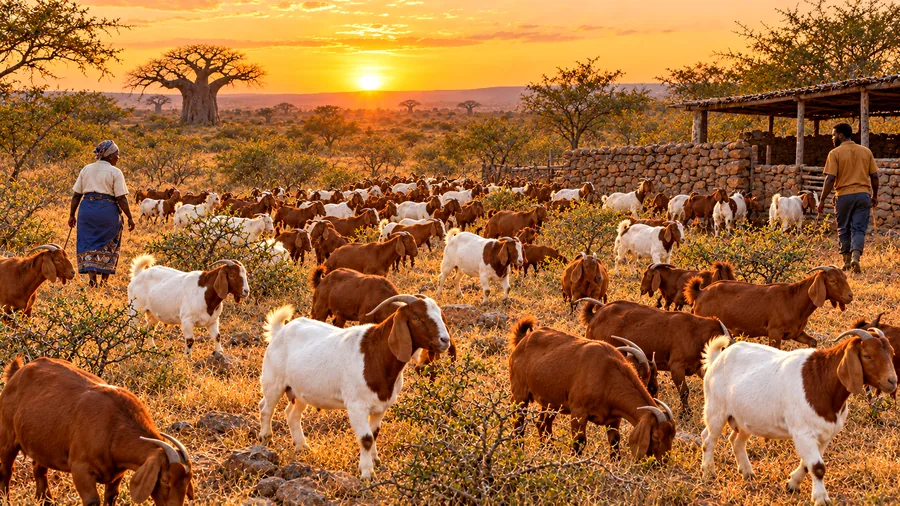
Goat farming in Zimbabwe
Choosing a breed, housing and feeding, kidding, keeping goats healthy and finding buyers.
- Goats, 2025
- 5.1 million
- Growth on 2024
- 4.6%
- National offtake
- 23%
- Sold informally
- 74%
Goat numbers are rising as farmers turn to hardy small stock. Most goats are still sold on the open market.
1. Why goats
Goats are the smallholder's bank account: they breed fast, browse where cattle cannot, cost little to keep and sell easily for cash. In a dry year they usually hold up better than cattle.
Zimbabwe had 5,107,205 goats in 2025, up 4.6% on 2024, against 5.76 million beef cattle and 767,263 sheep.1 The government's crop and livestock assessment put the growth down to high kidding rates and better rains; national offtake (the share of the flock sold or slaughtered in a year) averaged 23%, highest in Mashonaland Central (28%) and Manicaland (27%).2
A past chairman of the Boer Goat Breeders Society of Zimbabwe told The Herald that local farmers still cannot meet demand for goat meat, and that ten or more goats fit in one bakkie, where only one cow would.2
2. Choosing a breed
Most of Zimbabwe's goats are indigenous. The Ministry of Agriculture's livestock manual for farmers gives these averages:3
| Breed | Doe (kg) | Buck (kg) | Kid at 12 months (kg) | Kidding rate |
|---|---|---|---|---|
| Mashona (small East African) | 25 | 35 | 17–18 | 120% |
| Matebele | 30–35 | 45 | 25 | 150% |
| Boer (meat) | 50 | 65 | 20–25 | 160% |
| Saanen (milk) | 65 | 65 | 25–30 | Up to 200% |
- Indigenous goats are hardy and well suited to their home areas: Mashona types in the drier parts of Mashonaland, the Midlands and the Zambezi Valley, the larger Matebele type in Matabeleland South and Masvingo.4
- Boer goats are almost twice the size of Matebele goats4 and fetch a premium as breeding stock, but need better feed and care. Many farmers cross a Boer buck with indigenous does to get bigger kids that keep some hardiness.
3. Housing and feeding
- The pen. On gently sloping, well-drained ground, with a raised floor 1–1.5 m above the ground, a roof 2–3 m high and gaps for ventilation. Allow about 1.5 m² per goat in a permanent pen, 1 m² in an overnight pen and 3 m² for a doe and kid or a buck.3
- Browse first. Goats spend about 70% of their feeding time browsing and 30% grazing. On veld, 10–12 goats of about 40 kg count as one livestock unit; on planted pasture, allow about 5 goats per hectare.3
- Dry-season supplements. Maize stover, sorghum stalks and straw for bulk; maize, sorghum or rapoko grain for energy; and cowpea, groundnut or bean residues and pods for protein.3
4. Breeding and kidding
Mating
One buck to 40–50 does. Run them together for 6–8 weeks, timed so kids are born in the dry season, normally August–October or April–May, when fewer die from cold and wet.3
Gestation: about 5 monthsBefore kidding
Two weeks before, prepare a clean, dry, warm, draught-free kidding pen with fresh bedding.4
The first six weeks
Make sure every kid suckles early. Kid deaths can reach 17%, mostly from pneumonia after cold and wet weather, so shelter in the first six weeks matters most.3
Weaning: about 4 months
Keep records of each doe's kids. Cull does that produce little milk or fail to kid.3
5. Health
- New stock. Dip and deworm any new goats before they mix with your flock.3
- Worms. The Ministry manual suggests dosing for roundworms at the start of winter (May–June) and the start of summer (November), wireworm in January, and tapeworm and liver fluke in August–September, ideally after a dung test and on your veterinary officer's advice.3
- Vaccination. Pulpy kidney is the routine one: kids at weaning, other animals once a year. Ask your vet about others, such as anthrax, blackleg and pasteurellosis, where there have been outbreaks.3
- Feet. In the rains, a footbath helps control foot rot.3
Foot-and-mouth in 2026. FMD was confirmed in Matabeleland South in January 20265 and goats can carry it. Goats moving between farms or districts need a veterinary movement permit. Check with the district veterinary office before you buy or move animals.
6. Selling goats
Most goats are sold informally: in 2025, 74% went through the open market, 21% to middlemen, 4% to abattoirs and 1% through regulated channels. The average carcass was 13.8 kg.2
- Sell by condition and weight. A goat in good condition sells for more. If you can, weigh it, and agree the price per head or per kg before loading.
- Breeding stock pays more. Registered or well-recorded Boer and crossbred does and bucks sell above slaughter price. Keep records of parents, age and kidding.
- Sell before the dry season bites, while animals still carry condition.
- Paperwork. Give the buyer a written receipt with the number of goats, their marks and the price, and arrange the movement permit.
You can list goats and sheep free on the goats and sheep board, see upcoming livestock auctions, and browse everything near you on the marketplace. Buyers: read the buying livestock checks — most apply to goats too — and see the animals before you pay.
Checklist
- Breed chosen for your area and feed: indigenous, Boer or a cross
- Raised, dry, ventilated pen with enough space per goat
- Dry-season feed and supplements planned
- Mating timed for dry-season kidding
- New stock dipped, dewormed and kept apart first
- Pulpy kidney vaccination and a dosing plan agreed with a vet
- Records of kids, sales and deaths
- Movement permit and FMD check before buying or moving
This guide is not veterinary advice. Disease, dosing and movement rules vary by district. Talk to your local veterinary officer or AGRITEX extension officer before you start.
Sources
- ZimStat — Environmental Resources Statistics 2025 report, Table 10: national herd and flock 2020–2025
- The Herald — Small livestock production on the rise (May 2026), citing the Crops, Livestock and Fisheries Assessment
- Ministry of Lands, Agriculture, Fisheries, Water and Rural Resettlement (AGRITEX) — Livestock production manual for farmers (2021)
- Heifer International Zimbabwe — Smallholder goat management manual
- allAfrica — Foot and mouth outbreak hits Matabeleland South (January 2026)